

People often use “orphanage” to describe any residential facility for someone without family support, but the term has a specific child-welfare meaning. By separating resident age, legal purpose, care level and admission rules, you can identify the right Pune service for an older person who needs somewhere safe to live.
Key takeaways
- Senior living centres provide care for older adults, not orphanage services for children.
- Ask who holds legal authority when an abandoned senior needs admission.
- Check licensing, nursing cover, medical arrangements and emergency procedures before admission.
- Match dementia, mobility and medical needs to the facility’s actual care level.
A senior living centre is not an orphanage
No: a senior living centre in Pune is not an orphanage merely because some residents have no living relatives. The answer to “Is a senior living centre an orphanage in Pune?” depends on the residents and the facility’s purpose, not on family contact.
In ordinary language and child-welfare law, an orphanage is a residential institution for children without parental care. India’s Juvenile Justice framework addresses children who are orphaned, abandoned or surrendered and regulates child-care institutions. That terminology does not classify an older person left without family support.
Under the Maintenance and Welfare of Parents and Senior Citizens Act, 2007, a senior citizen is a person aged 60 or above. The Act separately recognises old-age homes for indigent senior citizens, placing them in the senior-care category.
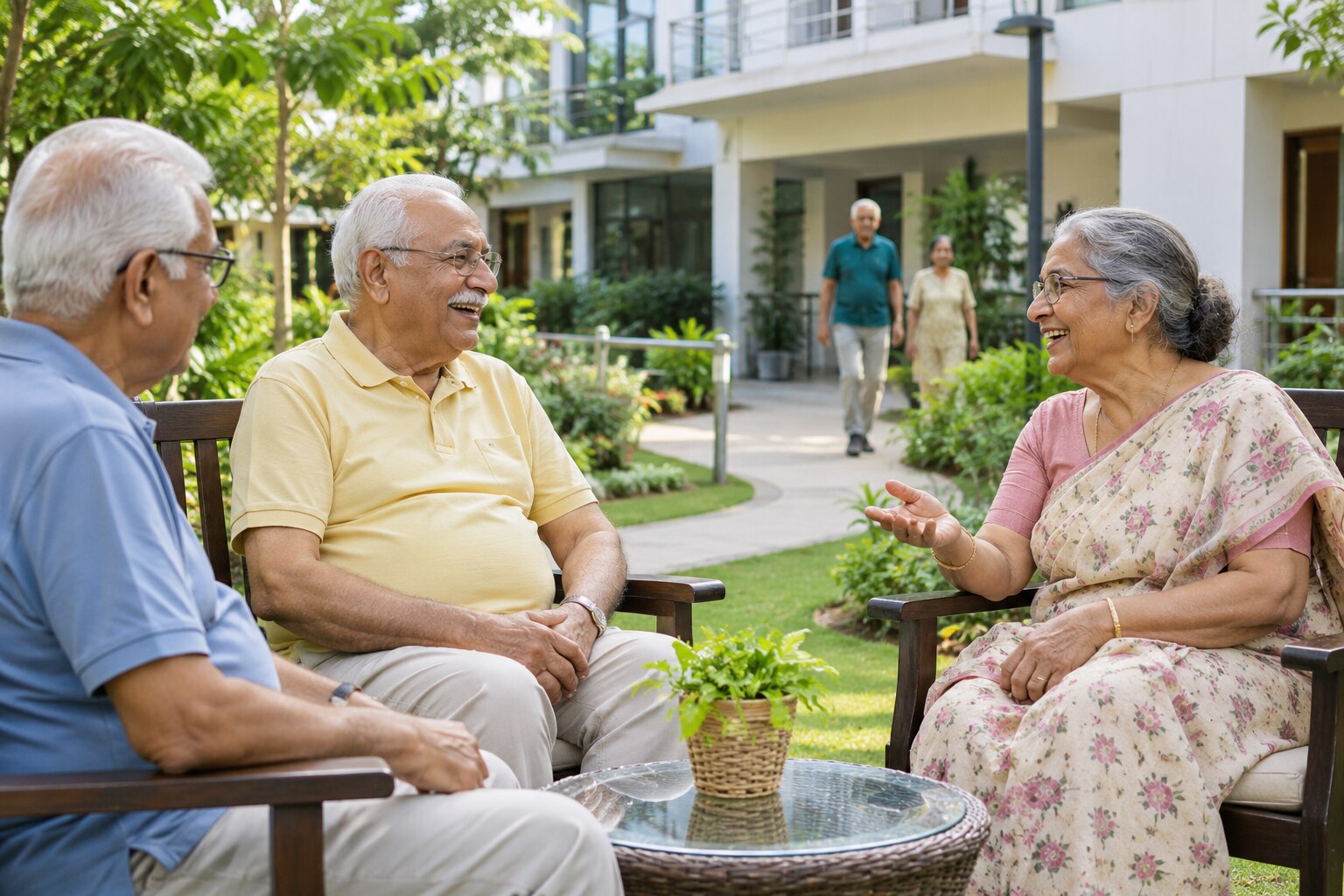
The orphanage–elderly care difference in Pune is therefore straightforward: an orphanage protects and rehabilitates children, while an old-age home or senior-living centre accommodates older adults and provides support for daily living and health needs. Such a centre may accept someone with a spouse, children or other relatives, as well as someone without family support.
Family involvement is not the test. The resident group and governing purpose are. An older adult without safe support may be described as abandoned, destitute or homeless, depending on the facts—not as a child in an orphanage.
Old-age home, orphanage and elderly shelter mean different things
An old-age home or orphanage in Pune is defined by whom it serves and why it operates, not simply by whether residents have relatives.
| Type | Residents and administrative purpose | Accommodation and support |
|---|---|---|
| Orphanage or child-care institution | Children without parental care; protection, family tracing, rehabilitation and child development | Accommodation, schooling and education; family involvement focuses on tracing, reunification or safe guardianship; medical care supports children’s health |
| Old-age home | Adults, generally aged 60 or over; residential care for older people | Accommodation and meals, with personal care, mobility help, medication support, companionship or nursing; residents may have spouses, children or other relatives |
| Elderly shelter in Pune | An indigent, homeless or otherwise vulnerable senior placed through charitable or government-supported arrangements | Basic accommodation and safety, with assistance and referrals defined by the shelter; medical support varies |
| Private senior-living residence | Older adults who choose communal housing and can meet the provider’s admission and fee rules | Services range from a room and meals to assisted living, dementia supervision, nursing or medical treatment; verify the written scope |
Schooling and employment are central to a child-care institution, not an old-age home. Older residents need help with daily living, medication, mobility or health care instead.
“Abandoned senior” is narrower than “senior living resident.” Abandonment involves neglect, desertion or lack of safe accommodation and support; choosing to live communally does not by itself mean a person was abandoned.
What to do when an older person is found without safe support
Treat an older person found alone as a safeguarding case, not an ordinary admission enquiry. Move them away from traffic, violence, extreme weather and other hazards. Call emergency medical help for injury, confusion, breathing difficulty or another urgent symptom.
- Ask their name, age, address and wishes if they can communicate. Distress does not prove incapacity.
- Contact relatives, neighbours, a trusted friend or known caregiver only after checking that contact will not increase danger.
- Record consent before moving the person or handling documents, cash, medicines or belongings. Make an itemised handover record, signed by the recipient and a witness.
- If no safe family option exists, contact local police, municipal or social-welfare services, an elder-support organisation or Elderline on 14567.
The key difference is the action required:
| Situation | Correct response | Why it matters |
|---|---|---|
| Routine admission | Discuss consent, documents, care needs and fees with the person | Voluntary senior housing is not abandonment |
| Person without safe support | Arrange safety, medical assessment and public or social-welfare guidance | Placement alone may leave neglect or danger unaddressed |
| Abandoned seniors in pune | Use police, welfare services or Elderline, not a children’s orphanage | The person needs senior safeguarding and an appropriate referral |
Section 24 of the Maintenance and Welfare of Parents and Senior Citizens Act, 2007 makes abandonment an offence when a person responsible for an older adult’s care or protection deserts them. A children’s orphanage is therefore not the correct referral route for an abandoned senior in Pune.
How to check whether a Pune facility can admit someone without family support
A facility’s ability to admit someone without family support depends on its written admission rules, not its label. An elderly shelter in Pune may take indigent or homeless seniors through referrals, while a fee-paying residence may accept residents with children, relatives or no dependable family at all.
| Resident group | Administrative purpose | Typical support |
|---|---|---|
| Children in an orphanage | Child protection, education and rehabilitation | Schooling, family tracing and child development |
| Adults in an old-age home | Residential care for people generally aged 60 or over | Meals, accommodation, daily assistance and companionship |
| Indigent or homeless seniors in a shelter | Immediate safety and support for people without sufficient means | Basic accommodation, referrals and agreed care |
Ask the facility these questions before arranging placement:
- What is the minimum admission age? Do you accept someone without children, relatives or a guarantor?
- Do you accept indigent, homeless or referred seniors, or only fee-paying residents?
- Is admission voluntary? If dementia or impaired decision-making affects consent, how do you assess capacity and record consent?
- Which documents are required: Aadhaar or another photo ID, age proof, medical records and current prescriptions? Who can be the emergency contact?
- Provide the written fee schedule, monthly charges, deposit, refund conditions, notice period, unpaid-fee policy and discharge or transfer process.
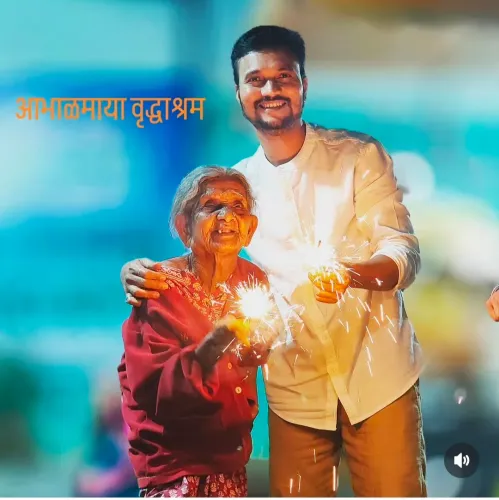
Read the resident agreement for rules on belongings, visitors, complaints and hospital transfers. For Aabhalmaya Oldage Home, these checks show whether its Pune process fits a senior without dependable family support; marketing cannot answer that. Apply the same checks when searching for an old age home or orphanage in Pune.
Related services
Independent Living Centre in Pune Independent Living Centre in Pune Abhalmaya Oldage Home – Independent Living in Pune Abhalmaya Oldage Home offers safe, comfortable, and supportive independent living services in Pune... View service → |
Old Age Home in Pune # Old Age Home in Pune – Aabhalmaya Oldage Home Aabhalmaya Oldage Home provides compassionate and supportive **old age home services in Pune** for... View service → |
Match the person’s needs to the level of care offered
Independent living fits a person who manages bathing, dressing, toileting, medicines, meals and transfers without regular hands-on help. The practical orphanage elderly care difference in Pune is the level of support required, not whether relatives remain in contact.
| Level of care | What the resident manages or needs | Check before admission |
|---|---|---|
| Independent living | Daily activities without regular hands-on help | Meals, housekeeping and emergency response |
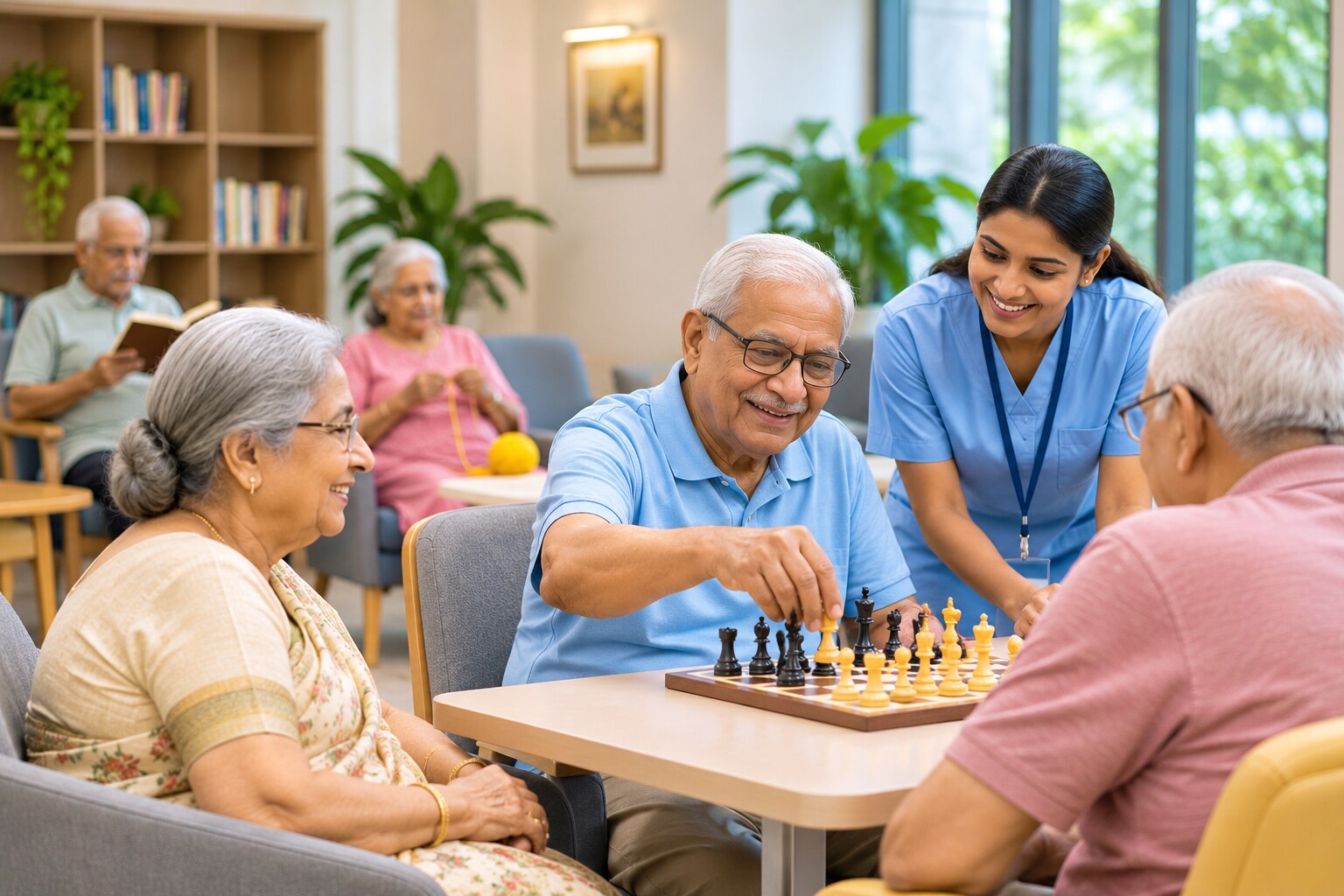
| Assisted living | Scheduled help with bathing, dressing, walking, eating or medication reminders | Staff availability and medication administration |
| Nursing care | Wound care, injections, catheter care, complex medicines, clinical observation or overnight nursing | Registered nurses overnight and hospital-transfer arrangements |
| Shelter placement | Immediate safety, basic accommodation and referral | Whether it offers temporary support rather than long-term care |
Assisted living is unsuitable when the person needs continuous clinical monitoring. Nursing care is the relevant level for oxygen use, dementia supervision, palliative care or end-of-life needs only if the centre explicitly accepts those requirements.
Ask these questions before choosing:
- Are nurses present overnight?
- Is a doctor employed or on call?
- Who administers medicines, and how are doses recorded?
- How does an emergency reach a hospital?
- Does the centre accept oxygen, catheter care, dementia supervision and end-of-life needs?
If you searched is senior living centre an orphanage in Pune, the answer remains no; its care level must be assessed separately. Compare the person’s actual needs with the written service scope, because “old-age home” does not itself mean medical care.
Frequently asked questions
Is a senior living centre an orphanage in Pune?
No. A senior living centre is designed for older adults who need accommodation, daily assistance or care. It is not an orphanage, even when a resident has no living relatives.
What is the difference between an old-age home, orphanage and elderly shelter in Pune?
An old-age home houses and supports older people. An orphanage provides care for children without parental care. An elderly shelter focuses on immediate safety and accommodation for older people who lack a safe place to stay; services differ by facility.
What should you do when an older person is found without safe support?
Move the person away from immediate danger, call emergency services for urgent medical needs, contact Pune police or local social-welfare authorities, and document their identity, condition and known contacts before arranging admission.
How can you check whether a Pune facility can admit someone without family support?
Ask for its admission policy, the person authorised to sign consent, identity and guardianship requirements, fee responsibility, medical records process, emergency contact procedure and written terms for residents without relatives.
How do you match an older person’s needs to a senior living facility?
Check whether the facility can manage the person’s mobility, bathing, medication, dementia, continence, nursing and hospital-transfer needs. Ask what staff provide around the clock and which services require outside professionals.
Related service
Elderly Care & Senior Citizen Assistance Elderly Care & Senior Citizen Assistance Abhalmaya Oldage Home **A Safe, Caring & Comfortable Home for Senior Citizens** At **Abhalmaya Oldage Home**, we provide compassionate care, dignity,... View service → |