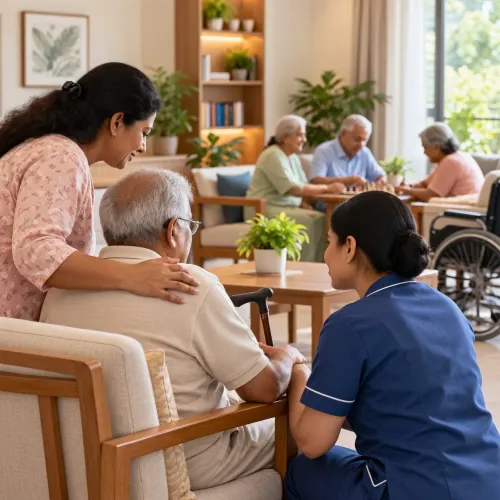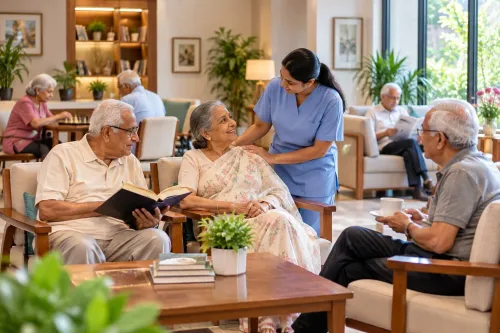

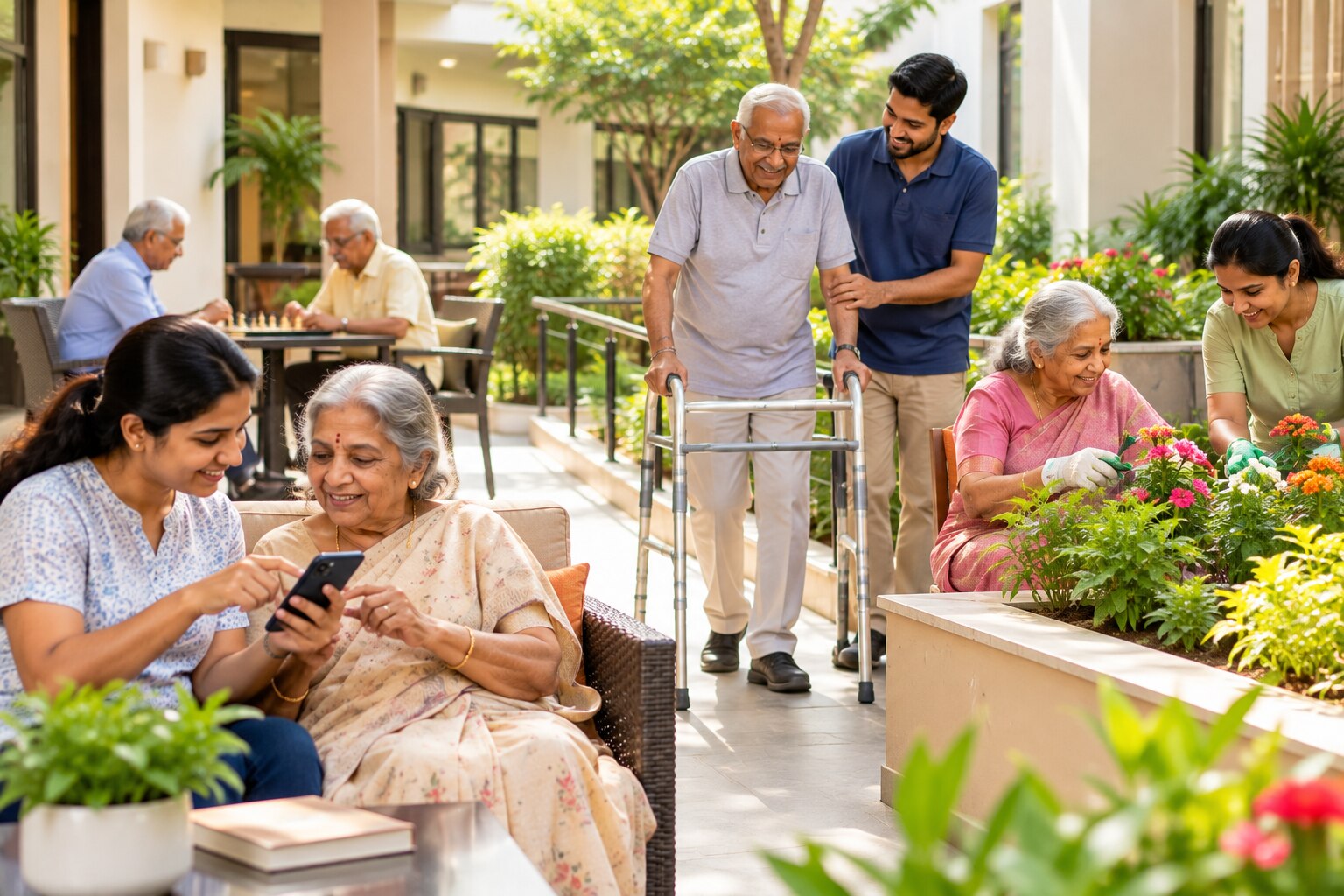
A volunteer can help an older person stay connected, practise useful routines, and make everyday choices without taking control away from them. By the end, you will know which activities are appropriate, what requires trained staff, how to match a volunteer with a resident, and which safeguards to confirm before visits begin.
Key takeaways
- Let residents choose activities, schedules, and the help they receive.
- Match volunteers by interests, communication style, language, and practical boundaries.
- Keep medication, transfers, personal care, and clinical decisions with authorised staff.
- Measure independence by choice, confidence, participation, and reduced reliance—not task completion alone.
What practical support can a volunteer provide?
A volunteer at an old age home can support independent living in Pune by helping an older person retain choice, confidence, and control. Independence does not mean completing every task alone; it means deciding how to spend time, which activities to join, and what help to accept.
Useful support includes:
- Regular conversation, reading, and companionship visits
- Walking with the resident’s permission and within the home’s safety rules
- Hobby groups, cultural programmes, and social events
- Help making phone calls, using video calls, or learning a phone function
- Practising a safe shopping trip, bus journey, or auto-rickshaw route
- Non-sensitive errands, such as collecting books or delivering a form
The aim is to practise capability, not take over. Walking beside someone who wants to learn a route builds confidence; completing every errand without involving them can increase dependence. Ask what the resident wants, offer choices, and let them do the parts they can manage safely.
A volunteer should not replace paid care, family support, rehabilitation, transport services, or medical services. Personal care, nursing, lifting, medication administration, banking, and treatment decisions belong to authorised people.
A volunteer can accompany a resident to an approved activity or help them contact family, but must follow staff instructions and report concerns rather than diagnose them. This makes volunteering a practical supplement to care, not a substitute for it.
How should a resident and volunteer be matched?
Match the resident’s consent, support needs, and practical preferences—not age or disability alone. Senior companionship in Pune works best when the resident wants contact and the volunteer can communicate safely within the agreed boundaries.
1. Ask the resident what they want from visits: conversation, reading, walking, hobbies, phone help, or quiet company. Confirm the preferred level of interaction, topics to avoid, gender preference where requested, and permission for each activity.
2. Record mobility, hearing, vision, memory, communication, and cognitive-support needs. A resident who uses a walker may need seated conversation; hearing loss may require face-to-face speech; memory or cognitive difficulties may require a trained staff member nearby and a consistent volunteer.
3. Match language and personality. Note whether Marathi, Hindi, or English is preferred, then consider shared interests, religious or cultural boundaries, conversational style, and whether the resident prefers an energetic or quiet companion.
4. Check neighbourhood, availability, and travel conditions before confirming the match. Traffic, heat, monsoon disruption, accessible toilets, and suitable seating can turn a promising outing into a missed or unsafe visit.
5. Start with a predictable plan, such as one visit each week for 30 to 60 minutes. Treat that as a planning starting point, not a universal rule; shorten or change it if the resident tires, disengages, or asks for a different rhythm.
6. Give every visit one simple purpose, request permission before starting, and tell the supervisor promptly about distress, confusion, a fall, or another concern. Reconfirm consent when the activity or resident’s condition changes.
Which tasks require staff, consent, or medical authorisation?
A volunteer at an old age home may offer companionship, reading, conversation, approved walking support, technology help, and supervised community activities. Ask the resident before each activity; consent belongs to the resident unless a documented decision-making arrangement applies.
| Task | Volunteer boundary | What is needed |
|---|---|---|
| Conversation, reading, hobbies, phone or video calls | Offer support without deciding for the resident | Resident’s consent |
| Walking or community activity | Follow an approved route and do not provide physical lifting | Trained staff assessment and direct supervision when required |
| Bathing, dressing, toileting, continence, feeding, or housekeeping | Do not provide personal care, nursing, or cleaning | Assigned care staff |
| Medicines, dressings, injections, therapy, or treatment exercises | Do not administer, change, or prescribe anything | Clinical authorisation and trained staff |
| Appointments or transport | Do not drive, escort alone, or manage emergencies without approval | Family consent, transport arrangements, and programme approval |
| Banking, cash, purchases, passwords, or financial decisions | Do not handle money, cards, accounts, or login details | A formal arrangement handled by authorised people |
Never independently lift or transfer a frail resident. A volunteer also cannot consent to treatment, refuse treatment, or decide what care someone receives.
Report rather than diagnose a new fall, confusion, withdrawal, breathlessness, bruising, missed meals, medication problem, or sudden difficulty walking. Tell the supervisor or designated family or clinical contact through the escalation procedure, and record what you observed, when it happened, and what the resident said.
Volunteers supplement paid care, rehabilitation, transport, and medical services; they do not replace them.
What should you check before choosing a Pune care setting?
The right volunteer model depends on where visits happen. An Old Age Home in Pune usually places volunteers within staff routines; an Independent Living Centre in Pune needs clearer arrangements because residents have more control over entry, outings, and daily decisions. A private home adds unanswered doors, travel, confidentiality, and emergency-escalation risks.
| Setting | Volunteer arrangement | Checks before agreeing |
|---|---|---|
| Residential old age home | Work inside facility rules and staff routines | Staff supervision, resident consent, sign-in record, and the route for reporting concerns |
| Independent living centre | Support chosen activities without taking over decisions | Entry arrangements, transport, accessible toilets and seating, emergency contacts, and monsoon or heat plans |
| Private home visit | One-to-one support with greater exposure to household risks | Who answers the door, what happens if nobody answers, private transport rules, and when to end or escalate a visit |
Ask the centre for these details in writing:
- The role description, identity-check process, safeguarding training, named supervisor, and sign-in or visit record.
- The consent procedure, incident-reporting route, emergency contacts, and instructions for falls, sudden confusion, breathlessness, or a locked or unanswered home.
- Rules for photographs and personal information, plus policies on gifts, loans, money, passwords, private transport, and unsupervised contact.
- The plan for traffic, heat, monsoon disruption, and accessible seating during outings.
These answers help you compare a volunteer arrangement with formal services. For example, before exploring Abhalmaya Oldage Home, ask which procedures are documented rather than assuming every setting uses the same safeguards. A volunteer supplements care; the setting must define who remains responsible.
Related services
Independent Living Centre in Pune Independent Living Centre in Pune Abhalmaya Oldage Home – Independent Living in Pune Abhalmaya Oldage Home offers safe, comfortable, and supportive independent living services in Pune... View service → |
Old Age Home in Pune # Old Age Home in Pune – Aabhalmaya Oldage Home Aabhalmaya Oldage Home provides compassionate and supportive **old age home services in Pune** for... View service → |
How can you tell whether volunteering is preserving independence?
Judge the arrangement by what the older person can choose and do, not by the number of visits. Ask directly: “Do you feel more connected, more confident, and still in control of decisions?” Their answer matters more than a volunteer’s impression.
Reliable senior companionship in Pune should support routine and connection, not become the only route to either.
- Check whether the person attends an activity they chose, rather than one selected for them.
- Check whether they maintain a routine, complete a desired errand, or use an emergency-contact plan with less prompting.
- Practise one phone function, such as answering a video call, without taking over the device or asking for passwords.
- Practise a bus or auto-rickshaw route safely, with staff approval and a clear plan for getting help.
- Record what the person wants to try next and whether confidence increased after the visit.
Adjust the match if conversation repeatedly causes distress, the language or interests do not fit, or the volunteer is doing tasks the person can practise. Shorten visits when fatigue or confusion appears; lengthen them only when the person asks and remains comfortable. Pause outings for unsafe weather, traffic, mobility changes, or missing supervision.
Report falls, new confusion, breathlessness, withdrawal, or unsafe walking to the named supervisor rather than diagnosing the problem.
The Maintenance and Welfare of Parents and Senior Citizens Act, 2007 provides a legal framework for senior welfare. An informal volunteer does not assume the legal or safeguarding duties of the home, family, service provider, or public authority.
Frequently asked questions
What practical support can a volunteer at an old age home provide?
A volunteer can offer companionship, conversation, reading, walks, games, hobby support, help with permitted everyday arrangements, and encouragement to join activities. The resident should retain control over choices and pace.
How should a resident and volunteer be matched?
Match interests, language, communication style, mobility, availability, and the resident’s preferred level of contact. Ask the resident what support feels useful before assigning regular visits.
Which tasks require staff, consent, or medical authorisation?
Medication, injections, wound care, toileting, bathing, lifting or transfers, financial transactions, handling personal documents, and clinical decisions require the appropriate staff, consent, or medical authorisation. Volunteers should not perform them independently.
What should you check before choosing an old age home in Pune?
Check staffing, emergency procedures, visitor and volunteer screening, accessibility, care boundaries, resident consent processes, complaint channels, activity schedules, and how the setting distinguishes independent living from medical care.
How can you tell whether volunteering is preserving independence?
Look for more resident-led choices, confidence, participation, social connection, and appropriate help-seeking. Reassess if the volunteer starts making decisions, creating dependence, or replacing skills the resident can safely use.
Related service
Elderly Care & Senior Citizen Assistance Elderly Care & Senior Citizen Assistance Abhalmaya Oldage Home **A Safe, Caring & Comfortable Home for Senior Citizens** At **Abhalmaya Oldage Home**, we provide compassionate care, dignity,... View service → |